“Self-awareness occurs when you’re aware of different aspects of yourself — including strengths, weaknesses, personality traits, behaviours, anxieties, and emotions. Research has repeatedly found that leader effectiveness is constrained or amplified by self-awareness.” Center for Creative Leadership
I’ve always believed that at the heart of any real growth is self-awareness. Without it, change is cosmetic at best — a new strategy layered over the same old habits. With it, transformation becomes possible. This is where horses play a profound and often unexpected role in leadership development. As I often say, they make the invisible visible.
Why self-awareness is the cornerstone of leadership
Leadership isn’t just about what we do; it’s about how we do it and the impact that has on others. Self-aware leaders understand their internal landscape — their triggers, default behaviours, emotional responses, and unspoken assumptions. They also appreciate how these inner dynamics shape the way they show up, especially under pressure.
Research consistently shows that leaders who lack self-awareness are more likely to overestimate their effectiveness, miss critical feedback, and unintentionally erode trust. Conversely, leaders with strong self-awareness are better able to self-regulate, adapt, and build authentic relationships. The challenge, of course, is that blind spots are hard to see from the inside.
Horses as mirrors, not metaphors
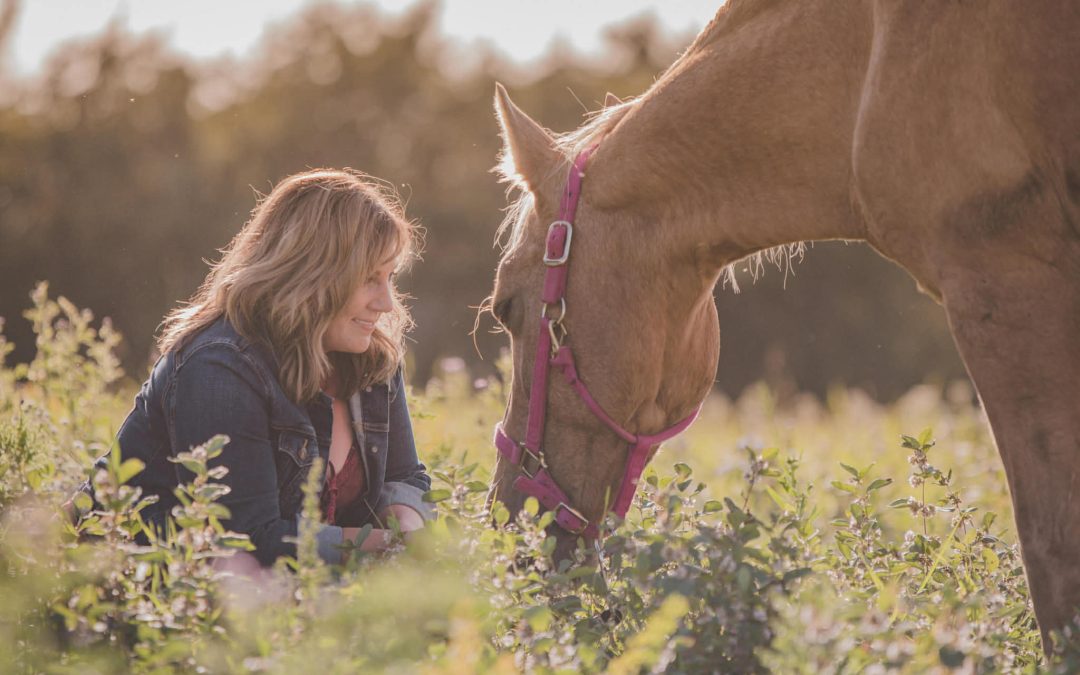
This is where equine-enhanced leadership development offers something truly unique. Horses don’t respond to titles, résumés, or carefully crafted leadership language. They respond to congruence. To presence. To intention and emotional authenticity.
As prey animals, horses are exquisitely attuned to subtle cues in their environment. They read body language, energy, breath, and emotional state with remarkable accuracy. When a leader steps into the arena, the horse doesn’t engage with who that person thinks they are — it engages with who they are being in that moment.
If there’s tension between intention and behaviour, the horse will reflect it. If a leader is confident on the surface but anxious underneath, the horse will notice. If someone is attempting to control rather than connect, the horse will respond accordingly. There’s no judgement — just honest, immediate feedback.
Making blind spots visible
Many leadership blind spots live below conscious awareness. We may pride ourselves on being decisive, unaware that others experience us as abrupt. We may see ourselves as collaborative, while subtly avoiding difficult conversations. Horses bring these patterns into the open without a single word being spoken.
In an equine-enhanced session, participants often experience an “aha” moment — a direct, embodied realisation of how their internal state shapes their external impact. This isn’t feedback delivered through a performance review or survey; it’s lived, felt, and undeniable. The learning lands not just in the head, but in the body.
From awareness to choice
Self-awareness on its own isn’t the end goal — it’s the starting point. Once leaders can see their patterns clearly, they gain choice. Choice to respond rather than react. Choice to adjust their presence, communication, or approach. Choice to lead with greater intention.
Horses support this learning beautifully because they also respond to change in real time. When a leader shifts their energy, clarifies their intention, or becomes more grounded, the horse’s behaviour changes too. This immediate cause-and-effect reinforces the understanding that leadership is not static — it’s relational and dynamic.
A different kind of leadership conversation
Equine-enhanced leadership development invites leaders into a different conversation about effectiveness — one that goes beyond competencies and into consciousness. It asks: Who are you being when you lead? What are you broadcasting without realising it? And how might greater self-awareness transform not just what you do, but how you’re experienced?
At its core, this work is about alignment — aligning inner state with outer action. Horses don’t let us hide from ourselves, but they also don’t criticise. They simply reflect. And in that reflection, leaders often find the clarity, humility, and insight needed for genuine growth.
Because when the invisible becomes visible, real leadership begins.